Theory into practice: The "why" of Behavior Issues
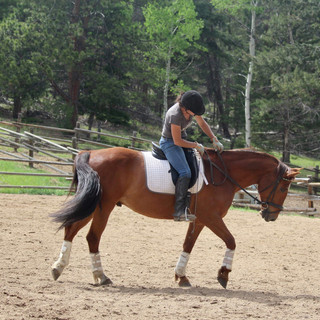
Problem horse behavior is a popular topic, especially in my horse world. Is it science, or is it art? Where do we begin?
Evaluation for any training or rehabilitation program should start with the horse’s history and a thorough veterinary medical assessment to rule out clinical issues.
“When a horse is diagnosed with a locomotor disorder, the veterinarian treats the specific injury to restore the horse to soundness. Even after the injury has healed, however, the horse may not be fully functional due to persistent limitations in movement or strength in specific areas of the body. As in people, rehabilitation seeks to optimize function and reduce any existing disability using a variety of methods, including manual therapy, physical and mechanical agents, and specialized exercise regimes.”— Dr. Hilary Clayton
Some studies recommend Tellington Touch Equine Awareness Method (TTEAM) exercises, which involve touching the horse with a “wand” to stimulate awareness of specific body parts. Massage-style techniques are also used to bring awareness to muscles that have become “shut down.” This shutdown is a survival defense mechanism, allowing the body to tolerate pain and environmental or training-related stress. A similar response is commonly seen in humans who have experienced trauma.
The “why” behind horse behavior quickly becomes a complex question. The answer lies in theory applied to each individual situation.
The initial questions we must ask are:
What is happening?
Why is it happening?
How can we help?
Once the veterinary evaluation is complete—and medical findings and treatments are established—the assessment for a rehabilitative training program can begin.
Each program must be tailored to the individual horse, forming a working hypothesis based on history, physical structure, emotional responses, and movement patterns. The horse’s physical and emotional reactions, along with posture, become a blueprint for our theories. This process requires complex and critical thinking, allowing us to look beyond surface-level behaviors and into the underlying causes.
Labels such as “lazy,” “dumb,” or “bull-headed” have no place in the mindset of a trainer who views horses through the lens of biomechanics and education.
The series of photos below shows the beginning of a hopeful rehabilitation journey for a mare. Notice the changes in hind-leg stance, the dip in front of the withers, the prominence of the chest, and the overall height of the withers. I will continue to share updates on the progress of this remarkable horse’s journey.
Just like people, horses have their own unique stories, filled with triumphs and challenges. -Smokey the cow horse
like hv their own unique stories, filled with triumphs and challenges.
Smoky the Cow Horse
Just like


Comments